
Traditional Chinese Medicine has relied on the same core diagnostic methods for thousands of years: observation, listening, questioning, and palpation. The Four Examinations (四診) remain as relevant today as they were in the time of the Huángdì Nèijīng.
But the way we record and communicate those findings? That's evolving rapidly.
The Four Examinations in Modern Practice
For practitioners trained in TCM, the diagnostic process is intuitive. You observe the patient's complexion, posture, and spirit. You listen to their voice and breathing. You ask detailed questions about symptoms, sleep, digestion, and emotions. You palpate the pulse and abdomen.
Each examination produces layers of information:
- Inspection (望診) — facial complexion, body type, spirit/shen, tongue body color, tongue coating, tongue shape and moisture
- Auscultation & Olfaction (聞診) — voice quality, breathing patterns, body odor, breath odor
- Inquiry (問診) — chief complaint, symptom history, sleep, appetite, digestion, urination, bowel movements, temperature sensitivity, sweating, pain characteristics, emotional state, menstrual history
- Palpation (切診) — pulse rate, depth, strength, and quality at six positions (cun, guan, chi bilaterally), abdominal palpation, channel palpation, ashi points
From these observations, you synthesize a pattern diagnosis. A patient might present with a pale tongue with thin white coating, a deep and weak pulse on the right chi, lower back soreness, frequent urination, and cold extremities — pointing toward Kidney Yang Deficiency.
This kind of pattern recognition is the art of TCM. No software can replace it. But software can make it dramatically easier to document, communicate, and build upon.
The Challenge of Documenting TCM
The diagnostic frameworks of Chinese medicine don't map neatly onto Western medical documentation systems. A standard EHR built for a family practice or hospital has:
- No structured fields for tongue diagnosis
- No pulse quality descriptors beyond "regular" or "irregular"
- No way to record Eight Principles differentiation (八綱辨證)
- No pattern identification categories for Zang-Fu, Six Stages, Four Levels, or San Jiao patterns
- No point prescription fields organized by channel and indication
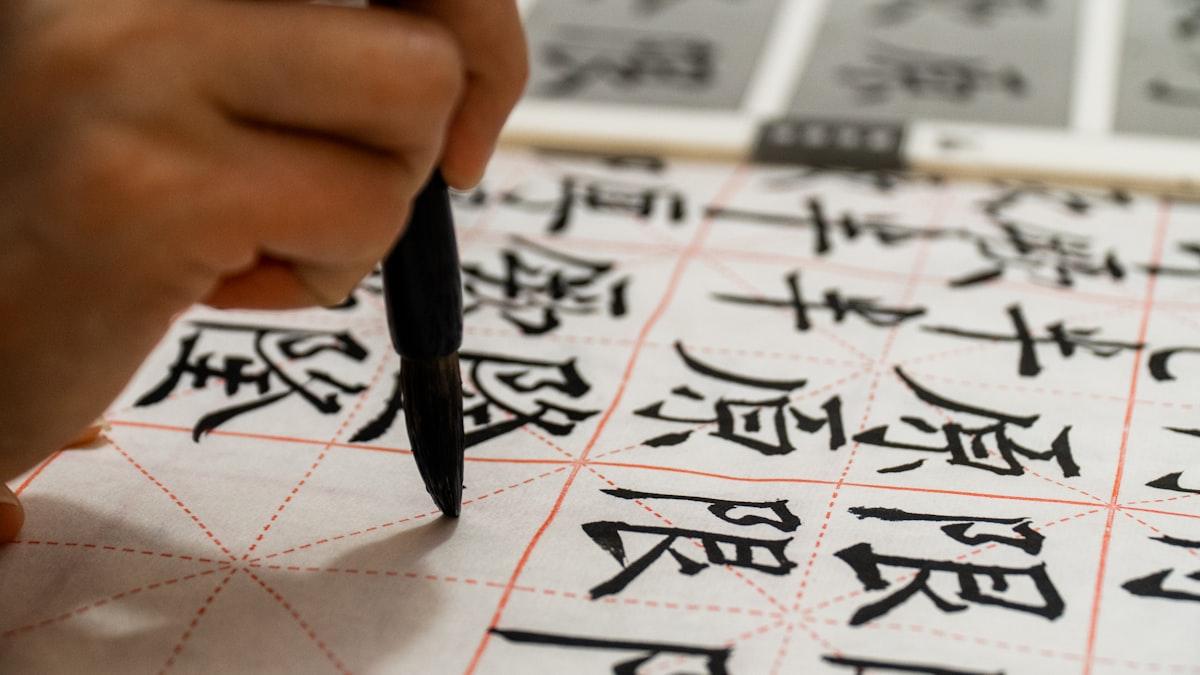
Practitioners working in these systems end up typing everything into free-text notes — which is slow, inconsistent, and difficult to search or analyze later. It's like writing Chinese calligraphy with a crayon. The tool wasn't made for the job.
What TCM-Native Charting Looks Like
A digital charting platform built specifically for TCM mirrors how you actually think clinically:
Tongue fields with structured selections for body color (pale, pink, red, dark red, purple), coating color (white, yellow, gray, black), coating thickness (thin, thick), coating distribution (even, patchy, rootless), body shape (thin, swollen, teeth marks, cracked), and moisture level (dry, normal, wet, drool).
Pulse fields for each of the six positions — cun, guan, and chi on both wrists — with quality descriptors like wiry, slippery, thin, choppy, rapid, slow, deep, floating, tight, soggy, leather, and scattered.
Pattern selection that maps to standard TCM diagnostic categories — Zang-Fu patterns (Liver Qi Stagnation, Spleen Qi Deficiency, Heart Blood Deficiency), Eight Principles, pathogenic factors, and channel syndromes.
Point prescriptions organized by channel, with fields for stimulation method (manual needling, electroacupuncture, moxa, press tack), needle gauge, depth, and retention time.
This structure doesn't constrain your clinical reasoning — it accelerates it. You're selecting and confirming observations rather than typing prose, which means faster documentation with fewer omissions.
AI as a Clinical Thinking Partner
Where digital tools get genuinely interesting is when AI enters the picture. Modern AI can analyze your collected clinical data and suggest diagnostic patterns to consider.
This isn't about replacing practitioner judgment. It's about offering a second perspective — the way a colleague might say, "Have you considered Liver Qi Stagnation transforming into Heat? The wiry-rapid pulse and red tongue edges could support that."
For newer practitioners building clinical confidence, AI-assisted reasoning provides a safety net that catches patterns they might miss. For experienced practitioners, it serves as a useful cross-check — especially on busy days when cognitive load is high and it's easy to overlook a finding that doesn't fit the obvious pattern.
The best AI tools for TCM understand that Chinese medicine diagnosis is holistic. A tongue finding, a pulse quality, and a symptom pattern aren't independent data points — they reinforce or complicate each other in ways that require the whole picture.
Preserving the Art While Embracing the Tool
The concern that digital tools will flatten TCM into Western categories is valid — but only if the tools are built wrong. The goal isn't to translate Chinese medicine into biomedicine. It's to give practitioners better ways to document, retrieve, and communicate their TCM-based clinical reasoning.
Your diagnostic framework stays rooted in Chinese medicine. Your documentation meets modern compliance and insurance standards. Both can coexist when the software understands the difference.
Building a Knowledge Base
There's a bigger picture too. As more acupuncturists adopt structured digital charting, the profession collectively builds a dataset that could eventually support clinical outcomes research, treatment protocol refinement, and evidence-based development of traditional methods.
Imagine being able to query anonymized aggregate data: "For patients presenting with Liver Qi Stagnation and concurrent Spleen Qi Deficiency, which point combinations are most commonly associated with positive outcomes?" That kind of analysis is only possible when clinical data is structured rather than buried in free-text notes.
The Four Examinations aren't going anywhere. But the tools we use to record and act on their results are getting a long-overdue upgrade.
Curious how digital TCM charting works in practice? Get in touch to see a demo.
Keep Reading
Related articles

Ready to love charting again?
Join the acupuncturists who've taken their evenings back.
Lock in Early Bird pricing30-day money-back guarantee · Annual Early Bird pricing
or